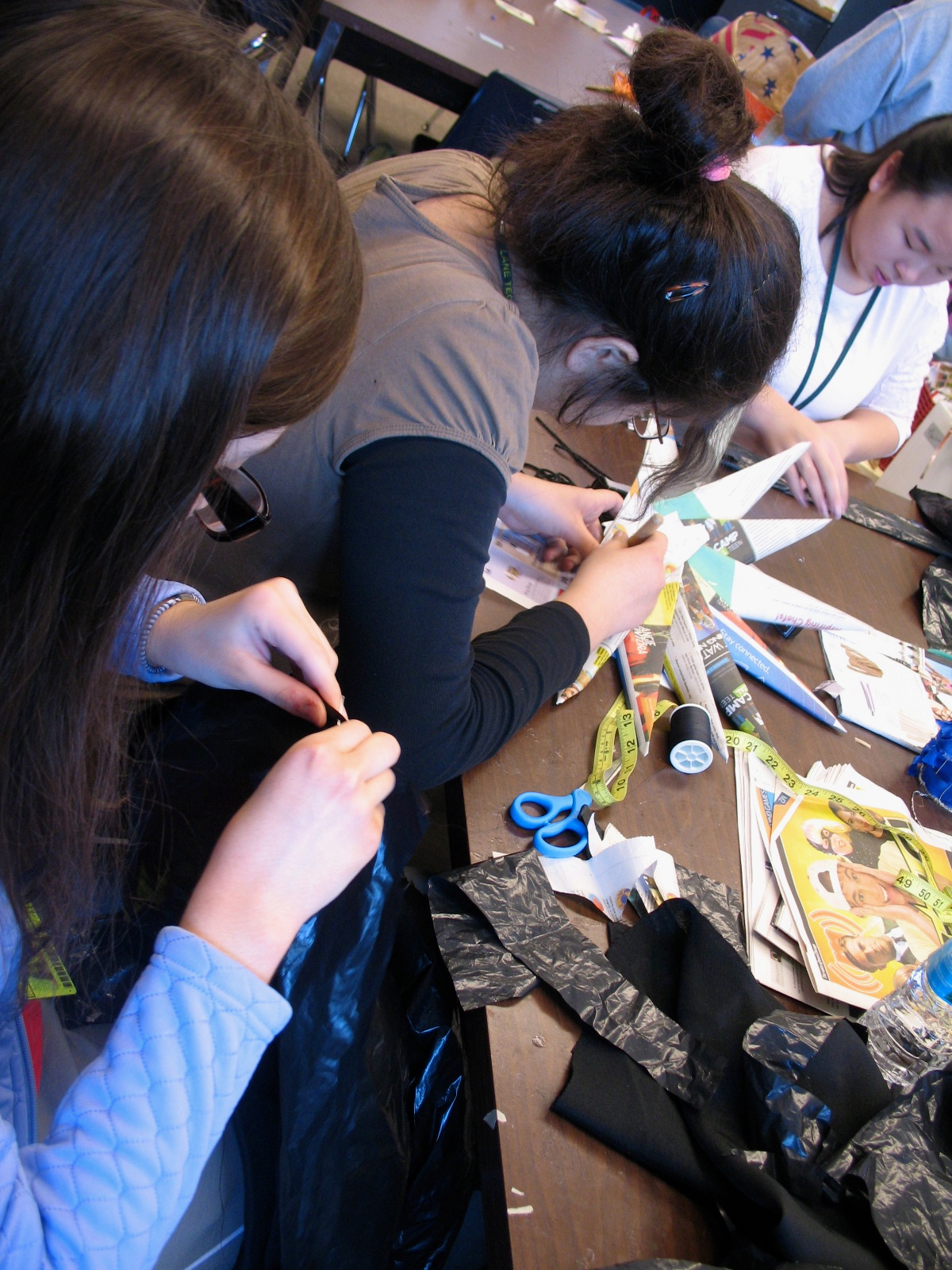
Students in Art 1 and Art Appreciation worked hard for over a month on a fashion outfits created almost entirely from recycled and re-purposed materials.
The process was long,
the students autonomous, the materials diverse and the problem solving
vast and complex. At the end of the project, 35 outfits had been
created by 35 design teams, and 5 fashion shows took place in front of a
live audience.
Now I will walk through the process.
-->
Before the Beginning…
Stretch and Explore Without Fear…Experiment
Students spend two days figuring out different ways to attach recycled
materials together. They rotate
through stations around the room exploring sewing, stapling, weaving, metal
hinges and tying. They try
attaching materials together in order to find out whether that form of
attachment will work with those particular materials. They add these experiments to their prior knowledge of
gluing, taping and tabbing as attachments. From this exploration, many
“specimens” of successful attachments are saved and displayed around the room,
in order to assist students in making attachment choices later on.
 |
| Specimens of what and how recycled materials can be woven together |
 |
| Specimens of how and what recycled materials can be sewn together. |
 |
| Victoria practices weaving with plastic bags at the weaving station. |
Students watched a slide show of how historical fashion influences
contemporary trends. They then looked through Xerox copies of fashion and
costumes from the last several hundred years, from a variety of countries. They cut out outfits or pieces of
outfits that interested or intrigued them in any way, without needing to
analyze why they were choosing those images. We
talked about how one way designers and artists begin is to gather and collect tons
of inspiration and imagery, and to then appropriate and link bits and pieces of
what they like.
-->
Based on that idea, students then created a sketch for an outfit based
on at least one of the aspects of a historical piece of fashion from a
particular time period. Next, they
created a second sketch of that same outfit they just designed, only this time
it should also be inspired by a particular word.

-->
Students presented the sketches to their peers in their group. Each person shared their design and
what it was influenced by. Each
member of the team gave each designer feedback on their work, discussing its
strengths and what makes it interesting or beautiful.


-->
The artists came to consensus on whether they would combine aspects of
each team member’s outfit into one unified outfit, or whether they would choose
one person’s entire design.
-->
One member of the team created a sketch of the final outfit and
idea. A discussion ensued about
who would create which garment and what role everyone would play in order to
make the outfit. Each student then
created a schematic drawing of the garment they, in particular, would focus on.
-->
Each team then creates a group poster from everyone’s garment drawings,
and they decide on a team name. The poster hangs in the room as a visual reference
for what will be made and how it will look.
-->
Each group determines who its model will be for the Fashion Greenway Show,
and that person takes their measurements to assist the group in making garments
that are functional.
-->
Students learn about armatures, which are structures like bones
underneath sculptures that can be created from recycled materials to support a
garment. Students begin creating an
armature for their garment to give it the overall shape and stability they
desire.
-->
Students work hard to make sure that the overall form and size they are
achieving with their armature reflects their original idea and sketch. They try
their armature out on the model to ensure that it will fit properly.
-->
Students use different recycled materials to add “skin” (or a covering)
to their armature. They choose from a wide variety of materials and seek out
the best attachments for attaching those materials to their armature.

-->
Each team worked together to create an outfit that looks unified. They used elements of art such as color
and texture, and principles such as pattern to create garments that look like
they go together and project a sense of wholeness and togetherness.
Each outfit was worn by the model in a fashion show that was attended by other art classes and teachers at Lane. The show took place to music in the hallway, which provided a great catwalk. Ballots were cast for the best outfit per show, by members of the audience.
From sketch to runway, the cycle and process is complete!
-->
“The only
journey is the one within.”
~ Rainer Maria Rilke
-->
“A piece
of art is never a finished work. It answers a question which has been asked,
and asks a new question.”
~Robert Engman
-->
“Art will
remain the most astonishing activity of mankind born out of struggle between
wisdom and madness, between dream and reality in our mind.”
~Magdalena Abakanowicz
-->
“The
reason that art is valuable is precisely why I can’t tell you how to do it. If
there were a map, there’d be no art, because art is the act of navigating
without a map.”
~Seth Godin
And now for the art teachers... pictures of the way the room was set up so students could be as autonomous as possible and access their many possible supplies.
Here is a link about Project Greenway, an opportunity for teen students to learn about the intersection of sustainability and creativity as they create recycled fashion for a competition.
About Project Greenway, Chicago